← मुख्य पन्ना2 मिनट का पाठ
धीरे-धीरे पढ़ें
Great Blue Heron (Ardea herodias) — Summary
Plumage is mostly blue-gray (hence the name), though the “blue” often looks more muted or gray in dim light. Adults have thin black plumes swept back behind the heads.
L
Lucas Hall
रचनाकार
याद रखें
नीचे पूरी रचना पढ़ें और अपने लिए उपयोगी बात चुनें।
अनुभाग
सकारात्मक विचार
Identification & Appearance
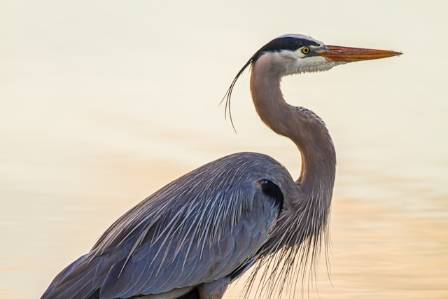
Very large wading bird, about 4 feet tall.
Long legs, a sinuous (curved) neck, and a large, dagger-like bill used for spearing fish.
Plumage is mostly blue-gray (hence the name), though the “blue” often looks more muted or gray in dim light. Adults have thin black plumes swept back behind the heads.
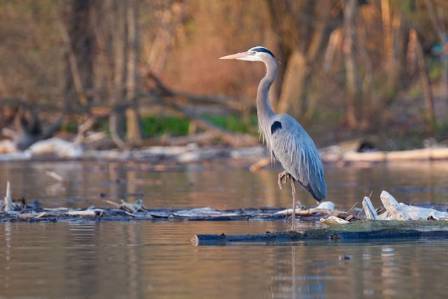
Often found at edges of wetlands: ponds, lakes, rivers. Prefers calm shallow waters where it can stand still and wait to strike prey.
Also seen in surprisingly urban settings, where suitable aquatic habitat exists.
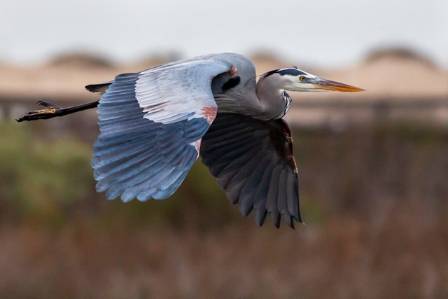
Flight features: long wings, slow deliberate wingbeats; neck retracted in an “S” shape; legs trailing behind.
Diet
Primarily fish; but also consumes frogs, insects, small mammals, crustaceans.
Hunts by standing still (ambush style), or walking slowly in shallow water, then striking quickly.
Reproduction & Lifecycle
Nesting is communal: herons build large nests (“rookeries” or “heronries”) often in trees over water; sometimes mixed with other wading birds.
Typical clutch size in Massachusetts is about 4 eggs; incubation ~ 28 days.
Young herons fledge (fly) in about 60 days; independence comes a bit later.
Range & Migration
Native across much of North America. Breeding range includes southeastern Alaska, much of Canada, the U.S., down into Mexico.
In New England (e.g. Massachusetts), migrating herons arrive in spring (as early as late March), and many depart by mid-summer to early fall. Some overwinter in milder coastal areas or places with open water.
Conservation & Population Trends
Once rare in the Northeast US (due to hunting, pollution), but has made a strong recovery over past decades.
Part of the recovery attributed to legal protections, improved water quality, and increased availability of nesting habitat (e.g. trees dying over flooded areas created by beaver dams, providing suitable nesting sites).
Threats & Challenges
Nest predation (e.g. raccoons, foxes), disturbance to nesting sites, human encroachment.
Harassment or disturbance by people, especially early in breeding season.
Freezing of water in winter can reduce food access, forcing migration.
अगला सहारा

· hi
सबसे ज़्यादा ग्रीन और ब्लू रन वाले स्की रिज़ॉर्ट 2025/2026
गीता

· en
Global Wonders: A Guide to the World’s Most Stunning Streets
Caleb Daniel Prescott
· hi
दुनिया के सबसे आश्चर्यजनक तटरेखाएं
अंजली

· hi
10 प्रेरणादायक महिलाएं जो दुनिया बदल रही हैं
हेमंत
· hi
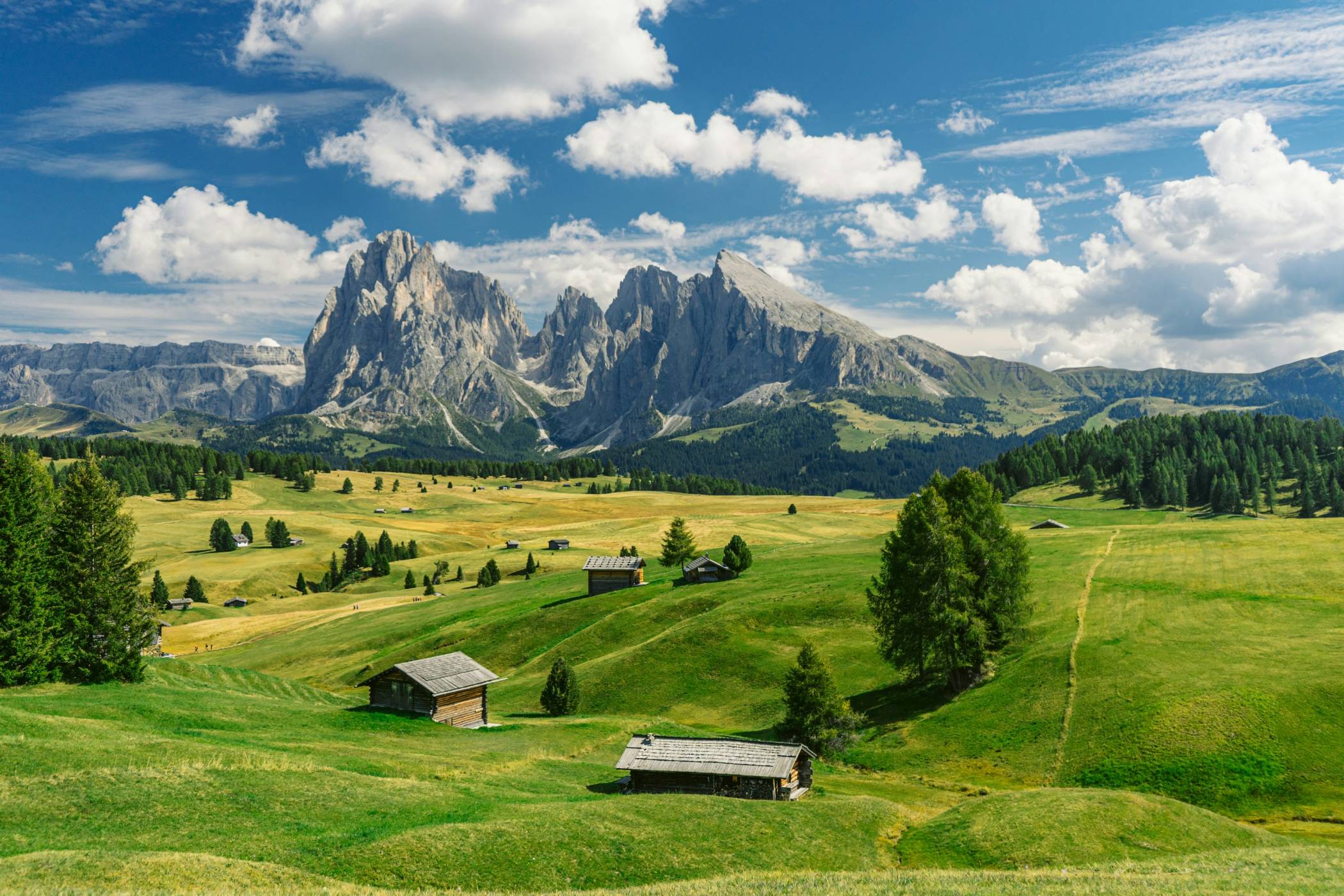
आल्पे दी सिउसी (सीज़र आल्म) यात्रा मार्गदर्शिका: हाइकिंग, वहां कैसे पहुँचें और कहाँ ठहरें
अमित

· hi
स्मार्ट होम क्या है? वो सब कुछ जो आपको जानना चाहिए
ईशा