धीरे-धीरे पढ़ें
Atlantic Puffins: Colorful Mariners of the North Atlantic
The Atlantic Puffin (Fratercula arctica) is a striking seabird, instantly recognizable for its bold appearance and specialized adaptations to life in the chilly waters of the North Atlantic. This short, robust member of the auk family is well-suited to its marine habitat, and its range stretches across the North Atlantic—from the northeastern coasts of the United States and Canada to Greenland, Iceland, and northern Europe.
Zoe Collins
रचनाकार
याद रखें
नीचे पूरी रचना पढ़ें और अपने लिए उपयोगी बात चुनें।
अनुभाग
सकारात्मक विचार
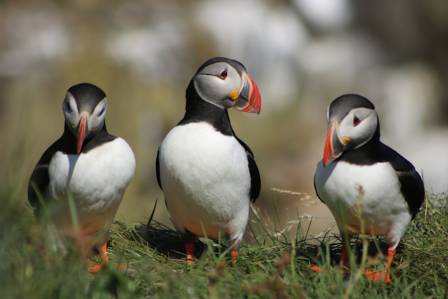
The Atlantic Puffin (Fratercula arctica) is a striking seabird, instantly recognizable for its bold appearance and specialized adaptations to life in the chilly waters of the North Atlantic. This short, robust member of the auk family is well-suited to its marine habitat, and its range stretches across the North Atlantic—from the northeastern coasts of the United States and Canada to Greenland, Iceland, and northern Europe.
Appearance and Distinctive Features
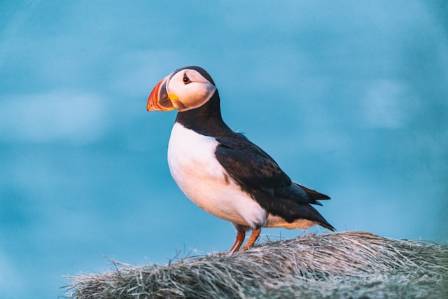
The puffin’s most iconic traits appear seasonally, particularly during the summer breeding period. Its plumage resembles a tiny tuxedo, with black feathers on the back and white on the chest—an effective camouflage both above and below the water’s surface. Adding a splash of color, the puffin displays bright orange webbed feet and a striking triangular bill adorned with bold bands of red, yellow, and black.
This colorful bill is temporary, made up of outer horny plates that develop before breeding. After the nesting season ends, these plates fall away, leaving a smaller, duller bill for winter life at sea. The bird’s facial coloration also changes with the season, transitioning from pale grayish-white during summer to darker gray in the non-breeding months.
Life at Sea
Outside the breeding season, Atlantic Puffins spend much of their lives at sea, often for up to eight months, far from land. They roam the North Atlantic, sometimes traveling as far south as the waters near the Canary Islands. Living in the open ocean requires remarkable physical adaptations.
Puffins are expert pursuit divers, using their partially open wings to “fly” underwater while their webbed feet act as steering rudders. Their compact bodies and dense bones allow them to dive to depths approaching 200 feet in search of prey. Their diet mainly consists of small schooling fish, including sand eels, capelin, and herring, which they catch and swallow underwater. Puffins are also capable of drinking saltwater, an adaptation that helps them survive months away from shore.
Breeding and Parental Care
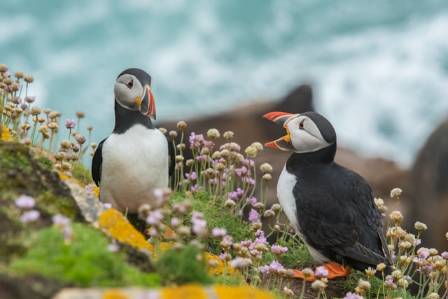
In spring, puffins return to their traditional breeding sites, often forming dense colonies on islands or rugged coastal cliffs. They are generally monogamous, frequently reuniting with the same mate and returning to the same nesting burrow each year. Nests are dug into soft turf with the aid of the bird’s sharp bill and claws, or occasionally placed in natural rock crevices.
The female lays a single egg in the burrow chamber, and both parents share incubation duties for 36 to 45 days. Once hatched, the chick—called a “puffling”—is covered in dark gray down and remains hidden underground. One of the most iconic behaviors of puffins is the adult returning to the burrow with several small fish held crosswise in its bill, facilitated by backward-pointing spines in the roof of its mouth.
Parents feed the puffling for about six weeks until it is ready to fledge. The young bird leaves the nest alone, usually at night to avoid predation from gulls, and heads directly out to the open sea. There it will spend several years honing its fishing skills and surviving independently before returning to land to breed.
Conservation Concerns
The Atlantic Puffin is currently listed as Vulnerable by the IUCN, reflecting population declines across much of its range. Climate change poses the greatest threat, altering ocean temperatures and currents and disrupting the marine food web. This particularly affects the availability of high-energy prey such as the lesser sandeel.
When food sources shift or become scarce, adults must travel farther to find nourishment, which reduces feeding frequency for chicks. This can result in higher rates of chick starvation and lower reproductive success. Additional threats include accidental bycatch in commercial fishing gear, such as gill nets, which entangle diving birds, and environmental pollution, including catastrophic oil spills that can devastate populations at sea.
अगला सहारा

मैकरॉन के मशहूर स्वादों और रंगों के लिए संपूर्ण गाइड
मेघा दत्ता

एक्रिलिक पेंटिंग में शुरुआती लोगों के लिए गाइड: मोनार्क तितली को चित्रित करना
नितिन राणा

How to Style a Shirt: The Ultimate Guide for Every Occasion
Karry

10 खूबसूरत पियोनी किस्में
अभिजित
मुख्य विचार: क्या जानवरों में भावनाएं होती हैं?
गौरी
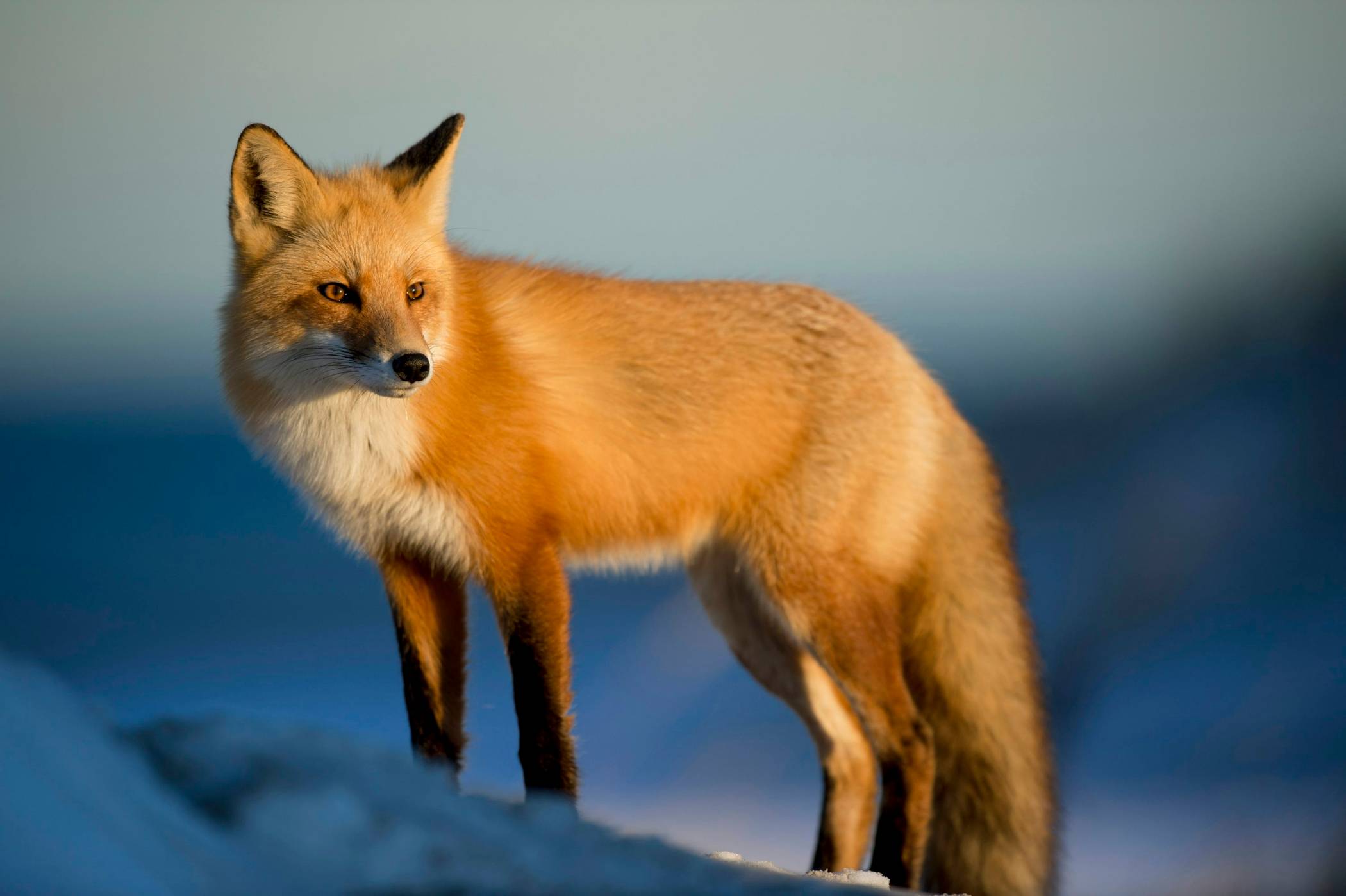
दुनिया की सबसे खूबसूरत लोमड़ियों की 7 प्रजातियाँ
दिव्या