धीरे-धीरे पढ़ें
Everything To Know About the Arc de Triomphe Before You Go
Paris is often described as the City of Light, but it is equally a city of remarkable landmarks. While the Eiffel Tower is usually considered its most famous structure and Notre-Dame Cathedral comes close behind, the Arc de Triomphe completes the trio of essential Paris monuments. This impressive example of Neoclassical design continues to draw large numbers of visitors each year.
Ava Collins
रचनाकार
याद रखें
नीचे पूरी रचना पढ़ें और अपने लिए उपयोगी बात चुनें।
अनुभाग
सकारात्मक विचार
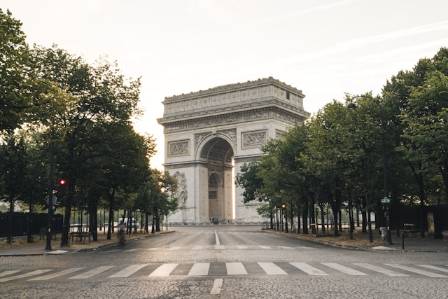
Paris is often described as the City of Light, but it is equally a city of remarkable landmarks. While the Eiffel Tower is usually considered its most famous structure and Notre-Dame Cathedral comes close behind, the Arc de Triomphe completes the trio of essential Paris monuments. This impressive example of Neoclassical design continues to draw large numbers of visitors each year.
Before you visit this historic arch, here is what you should know about its background, location, and how to make the most of your experience.
Where the Arc de Triomphe is located
Many first-time visitors confuse it with another similar monument. Near the Louvre in the 1st arrondissement, there is a smaller structure called the Arc de Triomphe du Carrousel, often photographed by tourists. It is attractive in its own right, but it is not the main arch most people are looking for.
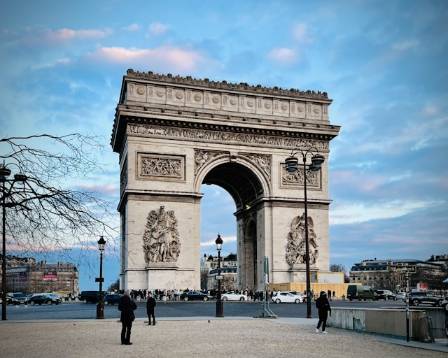
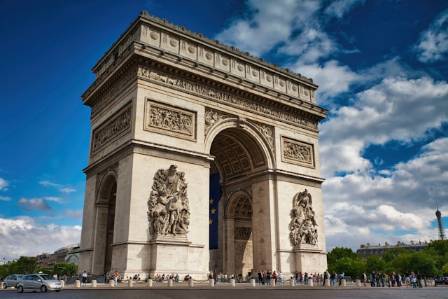
The true Arc de Triomphe stands in the 8th arrondissement at the center of Place Charles de Gaulle, where twelve major avenues radiate outward in a star-like pattern. Rising about 50 meters high, it dominates the surrounding roundabout and is impossible to miss once you are nearby.
It can be reached easily via Charles de Gaulle–Étoile station, served by metro lines 1, 2, and 6 as well as RER line A.
The historical purpose of the Arc de Triomphe
This monument is more than just an architectural feature; it carries deep historical meaning. It was commissioned during the rule of Napoleon Bonaparte after his victory at the Battle of Austerlitz in 1805. The emperor wanted a structure that would honor French military success, and architect Jean-François-Thérèse Chalgrin was assigned to design it.
Construction began shortly after and followed a Neoclassical style inspired by Roman triumphal arches such as the Arch of Titus. Although initiated under Napoleon, the monument was not completed until 1836, when it was officially inaugurated under King Louis-Philippe.
Over time, the arch has witnessed numerous historical events. Military parades from various nations have passed beneath it during different eras of conflict and celebration. Today, it is closely associated with remembrance ceremonies held at the Tomb of the Unknown Soldier beneath the structure, particularly on Armistice Day each year.
Visiting and experiencing the Arc de Triomphe
One of the most popular activities is climbing to the top of the arch. Visitors can take an elevator partway up, but the final section requires ascending a staircase of 284 steps. From the top, an observation platform offers wide views across Paris.
From this vantage point, landmarks such as the Eiffel Tower can be seen clearly, especially on bright days. There are viewing guides available to help identify major monuments, and the metal structure of the arch allows for striking photographs of the city skyline.
Because the monument sits in the middle of a very busy roundabout, pedestrians should avoid crossing the traffic directly. Instead, an underground passage at Place Charles de Gaulle provides safe access to the base of the monument.
What to explore nearby
The Arc de Triomphe sits at one of the most dynamic intersections in Paris. From this central point, twelve avenues extend outward, creating one of the city’s most distinctive urban layouts.
To the east lies Parc Monceau, a peaceful green space ideal for a relaxing walk. To the west, Bois de Boulogne offers a much larger natural escape within the city.
For shopping and dining, the nearby Champs-Élysées is one of the most famous avenues in the world, filled with luxury boutiques, cafés, and flagship stores. Visitors often stop at well-known patisseries such as Ladurée to sample traditional French pastries like macarons in a variety of flavors.
For a more upscale dining experience, the surrounding area also includes elegant restaurants such as Fouquet’s, known for its long-standing connection to Parisian cultural life and film awards ceremonies.
Visitor information and useful details
Admission prices vary depending on age and status. Adults typically pay a standard entry fee, while discounts or free admission are available for younger visitors, EU residents within certain age ranges, and individuals with disabilities along with a companion. Full details are available through official sources.
Climbing to the top is optional. Some visitors prefer simply walking around the base to admire its scale and detailed sculptures, while others choose to go up for panoramic views of the city.
Reaching the Arc de Triomphe from the Eiffel Tower is also possible on foot, taking roughly 30 minutes depending on pace. This walking route offers a scenic way to experience central Paris between two of its most famous landmarks.
Final impression
The Arc de Triomphe often surprises visitors with its size and presence when seen up close. Standing beneath it, looking upward at its detailed stonework, it becomes clear why it has long symbolized victory and national pride.
Whether viewed from the ground or from its observation deck, it remains one of the defining landmarks of Paris, surrounded by history, culture, and some of the city’s most iconic streets.
अगला सहारा

दुनिया के 9 सबसे बेहतरीन सूर्यास्त
भुवन

top 10 most beautiful cities at night
Lucas Reed

Compelling Facts About Mont Blanc
Matthew Collins

अमेरिका में 10 शीर्ष आइस स्केटिंग रिंक
अर्जुन

पुष्प चित्रण मार्गदर्शिका: सरल वानस्पतिक कला और जलरंग तकनीकों में महारत हासिल करना
दीपक मौर्य
गंभीर कर्ब अपील के लिए 10 सर्वश्रेष्ठ बाहरी घर के रंग
रिया