← मुख्य पन्ना3 मिनट का पाठ
धीरे-धीरे पढ़ें
The World's Greatest Bicycle Race
Widely regarded as the most prestigious and challenging competition in professional cycling, the Tour de France stands above other premier races like the Giro d'Italia and Vuelta a España in global recognition.
A
Anthony Robinson
रचनाकार
याद रखें
नीचे पूरी रचना पढ़ें और अपने लिए उपयोगी बात चुनें।
अनुभाग
सकारात्मक विचार
A Grueling Three-Week Spectacle
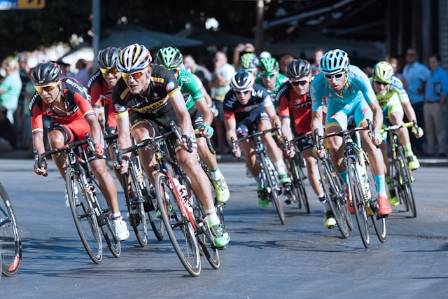
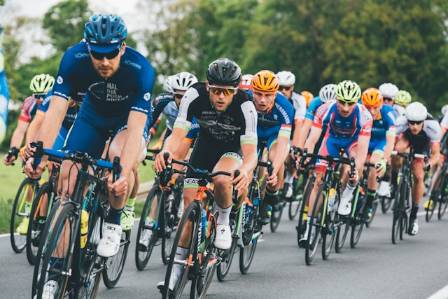
Widely regarded as the most prestigious and challenging competition in professional cycling, the Tour de France stands above other premier races like the Giro d'Italia and Vuelta a España in global recognition. Each July, this extraordinary event unfolds over approximately twenty daily stages, spanning about 3,600 kilometers (2,235 miles) across French terrain, with occasional brief passages through neighboring countries like Belgium, Spain, and Italy. While the Grand Départ sometimes occurs outside France, the race quickly moves to its homeland, where it represents the nation's most significant annual sporting tradition. The spectacle draws massive crowds along its route and commands a global television audience, showcasing what many consider the ultimate examination of human endurance.
The race's exceptional difficulty stems from its varied format, which includes individual time trials and stages traversing flat plains and formidable mountain passes. The rare athlete who excels in both the against-the-clock discipline and high-altitude climbing typically earns the right to don the famed maillot jaune—the yellow jersey—as the overall winner on the final day in Paris.
Historical Foundations
French cyclist and journalist Henri Desgrange established the Tour in 1903 to promote his newspaper, L'Auto (now L'Équipe). The race has been held annually except during the two World Wars. Two key developments captured public imagination: the 1910 inclusion of the perilous Pyrenean mountain passes, known as the "circle of death," and the 1919 introduction of the yellow jersey—the color of the organizing newspaper. This distinctive jersey is awarded each day to the rider with the lowest cumulative time across all stages, not necessarily the winner of that day's segment.
The Jersey Classification System
Beyond the yellow jersey, three other special jerseys recognize different achievements:
The green jersey is awarded for sprinting prowess, with points given at intermediate sprints and stage finishes.
The polka-dot jersey identifies the "King of the Mountains," the rider who accumulates the most points on categorized climbs.
The white jersey honors the highest-placed rider aged 25 or under in the general classification.
Team Strategy and Equipment
Professional cycling, while ultimately crowning an individual winner, remains fundamentally a team sport. Riders depend on teammates for crucial support: shielding them from wind resistance, providing replacement equipment during mechanical failures, setting a punishing pace in the mountains, and neutralizing rival attacks. Selfless teamwork is rewarded with prize money shares and renewed contracts.
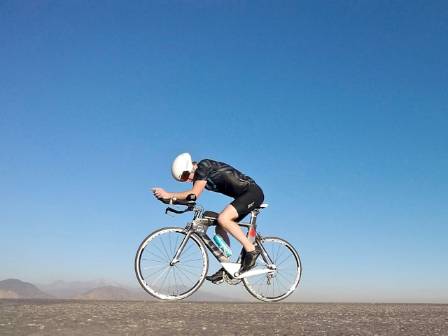
Competitors utilize specialized bicycles for different race conditions—aerodynamic machines for time trials, durable models for flat stages, and ultra-lightweight frames for mountain ascents—all conforming to International Cycling Union (UCI) regulations.
The Shadow of Doping
Performance-enhancing drug use has persistently marred the Tour's history. The 1998 Festina team expulsion revealed systematic doping, while 2006 champion Floyd Landis was stripped of his title for testosterone use. The most devastating scandal involved seven-time winner Lance Armstrong, whose titles were vacated in 2012 following investigations confirming his involvement in sophisticated doping practices. These incidents have repeatedly challenged the event's credibility, though ongoing anti-doping efforts continue to shape its modern era.