धीरे-धीरे पढ़ें
Pronghorn: Racers on the Great Plains
Badlands National Park is home to the pronghorn, a remarkable animal often called the “pronghorn antelope.” However, despite its common name, the pronghorn is not a true antelope. Instead, it has developed many similar features to antelopes found in Africa and Asia through a process known as convergent evolution.
Nicole Patterson
रचनाकार
याद रखें
नीचे पूरी रचना पढ़ें और अपने लिए उपयोगी बात चुनें।
अनुभाग
सकारात्मक विचार
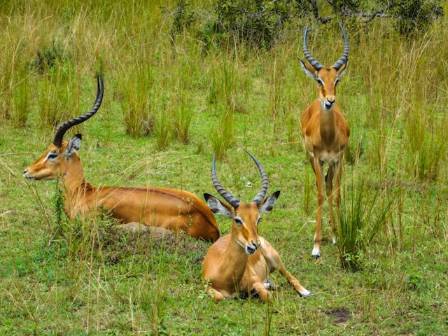
Badlands National Park is home to the pronghorn, a remarkable animal often called the “pronghorn antelope.” However, despite its common name, the pronghorn is not a true antelope. Instead, it has developed many similar features to antelopes found in Africa and Asia through a process known as convergent evolution.
Convergent evolution occurs when unrelated species develop comparable traits because they live in similar environments and face similar survival challenges. The pronghorn is the only surviving member of the family Antilocapridae and is actually more closely related to giraffes than to true antelopes.
The animal gets its name from the unique pronged horns that grow on its head.
Daily Life and Physical Features
From a distance, pronghorns can easily be mistaken for deer, but their differences become obvious when seen up close. They are smaller than most deer, standing at around three feet tall at the shoulder.
One of their most recognizable features is the series of white markings found on their rump, sides, underside, and throat. These bright patches make them easy to identify.
Male pronghorns grow branched horns that can reach about one foot in length, which gives the species its name. Females usually have much smaller, straighter horns.
Unlike deer antlers, which are completely shed and regrown each year, pronghorn horns grow around a permanent bony core covered by skin. However, the outer keratin layer of the horn is shed and replaced annually, making them different from the horns of animals such as bison.
Pronghorns live across the open grasslands and prairies of western North America, including regions of Canada, the United States, and Mexico. They are herbivores that feed on grasses, shrubs, and flowering plants growing across the plains.
The wide-open landscape also provides them with an important advantage when escaping predators.
The Need for Speed
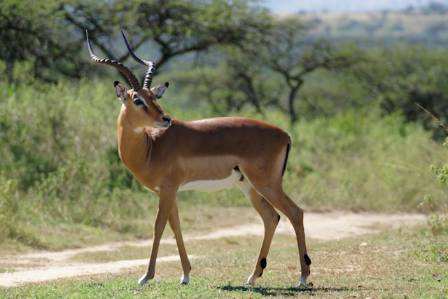
The most extraordinary feature of the pronghorn is its incredible running ability. Thanks to their long legs, lightweight bodies, large airways, and shock-absorbing hooves, pronghorns are among the fastest land animals in North America.
They can maintain speeds of about 55 miles per hour for roughly half a mile and can continue running at speeds close to 45 miles per hour over much longer distances.
This remarkable speed is unusual because none of the predators currently living in their habitat can match their pace. Scientists believe this ability developed because of an ancient threat: the American cheetah.
Thousands of years ago, an extremely fast ambush predator known as the American cheetah lived in North America. It disappeared approximately 12,000 years ago, but researchers believe the pronghorn’s exceptional speed may have evolved as a defense against this powerful predator.
Pronghorns in Badlands National Park
Within Badlands National Park, pronghorns are most commonly observed in areas of continuous, open grassland.
In the park’s North Unit, they are often found north of Badlands Loop Road (240) and in the nearby Buffalo Gap National Grassland. Visitors have also reported sightings around Sheep Mountain Table, both above and below the area along the boundary between the North Unit and South Unit.
Because pronghorns depend on open spaces for feeding and escaping predators, the wide grasslands of the Badlands provide an ideal environment for these fast and fascinating animals.
अगला सहारा

8 Essential Car Photography Tips for Stunning Images
David
पीले पेट वाला मर्मोट (मार्मोटा फ्लेविवेंट्रिस)
सागर

एक बढ़ती क्रांति
मीरा

Top 10 Stylish Beach Outfits for Every Occasion
Xavier

पाठकों के अनुसार, हमारे 10 सबसे लोकप्रिय लेयर केक
सुमित

Health Benefits of Tangerines
Vivian Moore