
The Chair: Design’s Indispensable Companion
The chair stands as an irreplaceable fixture in design, woven into the fabric of daily life through its central role in countless contexts—from intimate kitchen breakfasts and family dining gatherings to bedroom support, restaurant seating, office waiting rooms, and even places of worship. It accompanies life’s most significant moments, offering spaces for quiet reflection or joyful conviviality. This centrality has made it a canvas for formal and material experimentation across centuries, as designers have preserved its functional core while enhancing it with a growing focus on ergonomics and practicality. Choosing the right chair, whether drawing on contemporary innovations or iconic designs that have shaped its evolution, remains a meaningful decision that balances form, function, and context.
A Long Evolution: From Ancient Roots to the Renaissance
The history of the chair stretches far back, with hieroglyphics and archaeological discoveries in Egypt documenting its early existence. In the West, the chair emerged in the classical era, persisting through the Middle Ages and flourishing during the Renaissance—a pivotal period when it shifted from a luxury reserved for the elite to a more accessible piece of furniture. This era saw the rise of distinct architectural styles across geographical regions, with Italian, French, and English schools leading the way and influencing global design. Yet, it was the early 20th century that redefined the chair as we know it today, transforming it into an object of relentless experimentation and innovation in form, function, and production techniques that continue to resonate.
The Chiavarina: Bridging Ancient and Modern Design
A defining milestone in the chair’s evolution is the Chiavarina, designed in 1807 by Giuseppe Gaetano Descalzi, a carpenter from Chiavari. Descalzi codified the chair’s design in a drawing that remains in production to this day, creating a piece that acts as a bridge between ancient craftsmanship and modern design principles. Its timeless form would go on to inspire some of the 20th century’s most iconic chairs, proving that classic design can serve as a foundation for contemporary innovation while retaining its own enduring appeal.
Thonet’s Revolution: Bent Wood and the Cantilever Chair
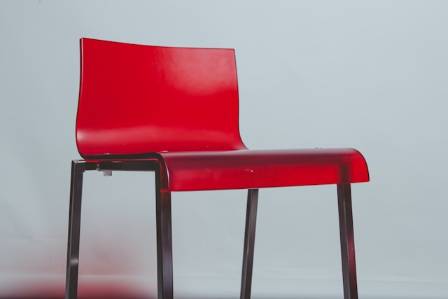
Another critical turning point came from Austria, where Michael Thonet began experimenting with wood bending in 1818. This technique would later give birth to the legendary Thonet No. 14, a design still produced today by Gebrüder Thonet Vienna, a subsidiary of the original brand. Building on this legacy, Thonet—another subsidiary of Michael Thonet—pushed the chair’s evolution further with the Cantilever Chair, designed by Marcel Breuer in 1929 and influenced by Dutch architect Mart Stam’s earlier concepts. In a nod to evolution, Thonet recently collaborated with designer Jil Sander to reimagine the Cantilever Chair, resulting in a version that blends natural elegance with modern glamour.
Mid-20th Century Innovation: Plastic, Single Legs, and Beyond
The second half of the 20th century marked an era of radical material experimentation in chair design. In 1952, Charles and Ray Eames revolutionized the industry with the first plastic shell chair, now produced by Vitra and still celebrated as the Eames Plastic Chair. Around the same time, Eero Saarinen introduced the Tulip Chair in 1957, produced by Knoll—a groundbreaking design that replaced the traditional four legs with a single central support, redefining spatial efficiency and aesthetic harmony. Not long after, Verner Panton’s 1967 Panton Chair (also produced by Vitra) evolved the Cantilever Chair concept, offering a seamless, sculptural form that became a symbol of mid-century modern design.
Honoring History, Embracing Modernity: Iconic Revisions
Innovation in chair design has always honored its historical roots, as seen in Gio Ponti’s 1957 Superleggera—a tribute to the Chiavarina. This simple yet elegant chair, still manufactured by Cassina, remains highly sought after for its formal versatility and functional excellence. Over five decades later, in 2002, Philippe Starck took a “back to the future” approach with the Louis Ghost Chair for Kartell, reinterpreting the opulence of Louis XV-style furniture through a contemporary lens using transparent polycarbonate. The result is a design that feels both nostalgic and cutting-edge, embodying the chair’s ability to bridge past and present.
The Timeless Allure of the Design Chair
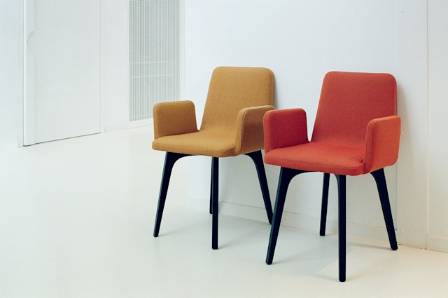
From ancient Egyptian hieroglyphics to 21st-century reinterpretations, the chair has evolved beyond its basic function to become a storyteller of design history. It has adapted to cultural shifts, technological advancements, and changing aesthetic preferences—from handcrafted wood pieces to mass-produced plastic shells, from four legs to a single support, from exclusive luxury to everyday accessibility. Yet, through all these changes, it has retained its core purpose: to support, comfort, and enhance human experience. The chair’s timeless allure lies in this balance of form and function, innovation and tradition, making it not just a piece of furniture, but a universal object that reflects the evolution of design itself.