धीरे-धीरे पढ़ें
Emerging Trends in Automated Delivery: Aerial Drones and Sidewalk Robots
Corporations are currently testing the implementation of pedestrian-level robots and aerial unmanned vehicles to transport retail goods and food orders. These autonomous or remote-controlled systems are designed for diverse applications, ranging from logistical support and scientific exploration to defense operations. While these devices can function on land, in the air, or underwater, terrestrial and aerial models have become the most prominent. Currently, robots designed for the local delivery of meals and packages are having the most notable influence on the configuration of urban environments.
Samuel Edward Blackwood
रचनाकार
याद रखें
नीचे पूरी रचना पढ़ें और अपने लिए उपयोगी बात चुनें।
अनुभाग
सकारात्मक विचार
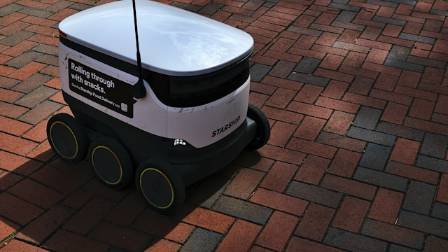
Corporations are currently testing the implementation of pedestrian-level robots and aerial unmanned vehicles to transport retail goods and food orders. These autonomous or remote-controlled systems are designed for diverse applications, ranging from logistical support and scientific exploration to defense operations. While these devices can function on land, in the air, or underwater, terrestrial and aerial models have become the most prominent. Currently, robots designed for the local delivery of meals and packages are having the most notable influence on the configuration of urban environments.
Comparison of Aerial and Ground-Based Delivery Systems
The two primary categories of delivery technology in use today are aerial and terrestrial drones. Both have deep historical roots, with early aerial prototypes appearing during the first World War and ground-based models emerging shortly thereafter. Aerial drones generally offer superior speed but face limitations in carrying capacity and require dedicated space for takeoff and landing. Furthermore, they demand significant infrastructure and are subject to strict aviation authority oversight.
Conversely, terrestrial drones—often called personal delivery devices (PDDs) or sidewalk robots—can transport heavier loads and require less specialized infrastructure. Their main drawbacks include lower travel speeds and shorter operational distances. Depending on their specific design, these ground robots may navigate via footpaths, bicycle lanes, or standard roadways.
Evolution of Logistics and Delivery Applications
For decades, drone technology was primarily utilized by the military, law enforcement, and media sectors. In the modern era, major e-commerce and technology firms like Amazon and Google are testing aerial systems for consumer deliveries and high-priority medical logistics. Meanwhile, delivery platforms like Uber and Postmates have investigated using these machines to bring groceries and prepared food directly to residents. These initiatives are being advanced through both internal research and collaborations with specialized tech firms. Some companies focus on larger street-legal vehicles for grocery transport, while others utilize smaller robots designed specifically for sidewalk navigation.
Operational Control and Autonomy Levels
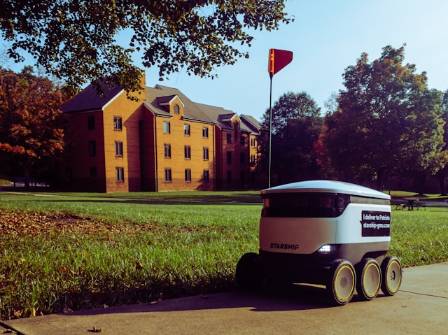
Delivery devices operate under varying degrees of human oversight: remote-controlled, semi-autonomous, or fully autonomous. Remote-controlled systems, where a human pilot directs every movement, remain the most common. Semi-autonomous systems manage most tasks independently but alert a human supervisor to take manual control when they encounter complex obstacles or ambiguous situations, such as navigating a difficult intersection. True full autonomy, where the device requires no human intervention under any circumstances, is still in its early developmental stages, mirroring the current progress of self-driving cars.
Factors Driving Technological Innovation
Several benefits are pushing the adoption of these technologies. First, drones can bypass traditional road congestion. Aerial models move through the sky, avoiding traffic entirely, while sidewalk robots utilize pedestrian paths to stay out of the way of cars. This allows for faster transit of time-sensitive goods, such as emergency medical supplies to hospitals or deliveries to isolated rural areas.
From an economic perspective, drones offer significant cost reductions. Most models are electric, which lowers energy expenses compared to fossil-fuel vehicles. Additionally, as these systems become more automated, the need for human labor decreases. Environmentally, the shift toward electric delivery fleets could potentially lower greenhouse gas emissions. However, the total ecological benefit depends on the local power grid used to charge these machines.
Challenges and Implementation Barriers
Despite their potential, several hurdles remain. Current urban infrastructure often lacks the necessary charging stations to support long-range drone operations, which may necessitate a higher density of localized micro-warehouses. Furthermore, most existing buildings are not configured to receive packages from landing aerial drones.
Privacy and safety are also major concerns. These devices utilize cameras, GPS, LiDAR, and various sensors to navigate, leading to anxieties about the collection and use of personal data. Safety risks also increase as drones become larger; collisions with pedestrians or complex interactions with human-driven vehicles pose ongoing challenges.
Regulation is another significant barrier. In many regions, aviation rules still require drones to remain within the operator's visual line-of-sight, and payload restrictions can make some commercial models unprofitable. Finally, practical daily issues such as inclement weather—including high winds, heavy rain, or extreme heat—along with physical obstacles like trees or parked cars, continue to interfere with reliable delivery performance.
Major Industry Participants
The development of this sector is led by technology giants, shipping firms, and transportation networks. E-commerce leaders have invested heavily in drone projects, though many have faced design and regulatory setbacks. Specialized divisions of major tech conglomerates have successfully launched limited aerial delivery services.
Traditional shipping companies and aerospace manufacturers are also active, testing urban freight services and medical supply delivery. In the transportation network sector, ride-hailing companies are developing drones to fulfill food orders and envisioning future "air taxi" services. Delivery-focused apps are also refining sidewalk robot fleets to handle short-distance "last-mile" deliveries in crowded city centers.
Practical Use Cases and Real-World Examples
Current applications focus heavily on time-sensitive and specialized logistics. While widespread doorstep delivery for every consumer is not yet a daily reality, business-to-business transport is growing. Notable examples include the successful delivery of blood and medical supplies across healthcare campuses and into remote rural communities. In these instances, aerial drones prove particularly effective at overcoming a lack of traditional road infrastructure. Additionally, various government programs use drones for the remote inspection of infrastructure and to assist first responders in search and rescue missions.
अगला सहारा

तनाव दूर करने और मूड बूस्ट करने के लिए 5 आउटडोर स्पोर्ट्स
शार्लोट
चट्टान चढ़ाई की तकनीक सुधारने के लिए टिप्स
सान्या

Famous Chair Designs: Elevate Your Interior with Iconic Seating
Theodore

सबसे ज़्यादा ग्रीन और ब्लू रन वाले स्की रिज़ॉर्ट 2025/2026
गीता
How Subways Function
Jake Morgan

नीस्ट पॉइंट लाइटहाउस: स्काई में सनसेट देखने के लिए सबसे अच्छी जगह
सीता