← मुख्य पन्ना5 मिनट का पाठ
धीरे-धीरे पढ़ें
A Journey Through Still Life: Famous Fruit Paintings in Art History
For centuries, the humble fruit has been a powerful subject in art, serving as a vehicle for exploring color, form, symbolism, and the very nature of artistic representation itself. From demonstrations of technical skill to profound allegories of life and mortality, fruit paintings offer a fascinating glimpse into the minds of the artists who created them. This exploration highlights ten significant works that showcase the diverse ways artists have approached this enduring theme.
I
Isabella Meyer
रचनाकार
याद रखें
नीचे पूरी रचना पढ़ें और अपने लिए उपयोगी बात चुनें।
अनुभाग
सकारात्मक विचार
For centuries, the humble fruit has been a powerful subject in art, serving as a vehicle for exploring color, form, symbolism, and the very nature of artistic representation itself. From demonstrations of technical skill to profound allegories of life and mortality, fruit paintings offer a fascinating glimpse into the minds of the artists who created them. This exploration highlights ten significant works that showcase the diverse ways artists have approached this enduring theme.
Giuseppe Arcimboldo – Rudolf II of Habsburg as Vertumnus (c. 1590–1591)
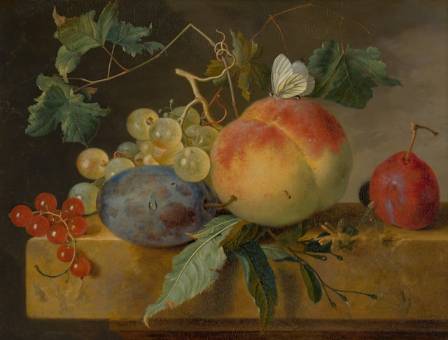
Arcimboldo's fantastical portrait is a masterpiece of Mannerist invention. It depicts Holy Roman Emperor Rudolf II not through traditional likeness, but as a composite of meticulously painted fruits, vegetables, and flowers, transforming him into Vertumnus, the Roman god of seasons and plant life. The painting is a complex allegory celebrating the emperor's prosperous reign, where each element symbolizes the abundance and harmony of his domain.
Luca Forte – Still Life with Grapes and Other Fruit (c. 1630)
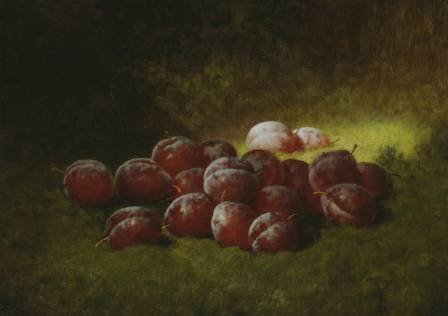
A stunning example of Baroque still life, Forte's painting on copper dazzles with its hyper-realistic detail and luminous finish. The composition centers on a bursting cluster of grapes—a classic symbol of abundance and fertility—surrounded by apples, a pomegranate, and small, life-like insects. The enamel-like surface, dewdrops, and intricate textures demonstrate a virtuosic skill in capturing the sensual beauty and transient ripeness of nature.
Vincent van Gogh – Quinces, Lemons, Pears, and Grapes (1887)
Painted during his Paris period, this work is a vibrant study in color and texture. Van Gogh arranged a variety of yellow-hued fruits—quinces, lemons, pears—against complementary blues and greens. His characteristic bold, expressive brushstrokes give the fruit a dynamic, almost vibrating energy. The painting reflects his exploration of color theory and his move away from the darker palette of his earlier work, showcasing his evolving post-Impressionist style.
Paul Cézanne – Still Life with Apples (1895–1898)
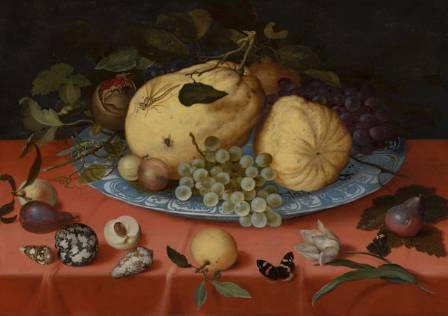
Cézanne revolutionized still life by shifting focus from mere representation to the underlying structure of perception. In this painting, the apples are solid, geometric forms. He deliberately ignored single-point perspective, presenting the tabletop from multiple angles and allowing the background curtain and wall to merge with the foreground. This approach, breaking objects into planes of color, was pivotal in the transition from Impressionism to the abstract art of the 20th century.
John Singer Sargent – Pomegranates; Majorca (1908)
While renowned for his society portraits, Sargent also created masterful still lifes. This painting focuses on the lush interior of a split pomegranate, its ruby-red seeds spilling forth. Rendered with loose, confident brushwork that retains a sense of realism, the fruit symbolizes abundance, fertility, and, within the context of classical myth (the story of Persephone), the cyclical nature of life and the underworld.
Frida Kahlo – Viva la Vida (Watermelons) (1954)
Kahlo's final painting is a powerful, life-affirming statement. Painted just days before her death, it features vibrant slices of watermelon in vivid pink, green, and red. The phrase "Viva la Vida" (Long Live Life) is inscribed on the central slice. For Kahlo, who endured a lifetime of physical pain, the ripe, open fruit became a bold symbol of resilience, the sweetness of existence, and an unflinching embrace of life even at its end.
Dorothea Eliza Smith – Frontispiece (1850–1853)
This exquisite watercolor by botanical artist Dorothea Eliza Smith represents the scientific and illustrative tradition in fruit painting. Her work meticulously documents a variety of fruits with scientific accuracy, celebrating their unique forms, colors, and textures at the peak of ripeness. It serves as a beautiful intersection of art and natural science, capturing the detailed beauty of the natural world.
Raja Ravi Varma – Lady With a Fruit (1894)
A leading figure of Indian modern art, Varma combined European academic techniques with Indian subjects and themes. This painting portrays a woman in traditional attire holding an orange. In the context of Indian culture and Hinduism, the orange and its color are often associated with sacredness, purity, and prosperity. The work elegantly blends portraiture with symbolic still life, reflecting Varma's unique cultural synthesis.
Ochiai Rōfū – Eve (1919)
This Japanese Modernist painting reimagines the Biblical Eve in a style influenced by European Post-Impressionism and Fauvism. The figure, depicted with non-Western features, reaches for a peach from the Tree of Knowledge instead of the traditional apple. In East Asian symbolism, the peach represents longevity and immortality, adding a layer of cross-cultural interpretation to the familiar story of temptation and the fall of man.
Julio Romero de Torres – Oranges and Lemons (1925–1926)
A haunting and sensual work by the Spanish painter, this painting features a nude woman standing before a grove of citrus trees, holding oranges against her body. The fruit, associated with the region of Andalusia, contrasts with the pale, melancholic figure. The painting evokes themes of fertility, sensuality, and perhaps the bittersweet nature of life and desire, wrapped in Torres' characteristic symbolic realism.
The Enduring Language of Fruit
Throughout art history, fruit has never been just a simple subject. It is a versatile symbol, conveying ideas about abundance and wealth, the passage of time and mortality (via ripeness and decay), sensuality and temptation, and the cycles of life and nature. These ten paintings demonstrate how artists from different eras and cultures have used this universal subject to explore technical mastery, compositional innovation, and deep philosophical and personal themes, ensuring that the still life remains a vital and expressive genre.