धीरे-धीरे पढ़ें
The Cutest Robots in the World
Robots usually fall into two categories in people’s minds: either irresistibly lovable or deeply unsettling machines that seem ready to overthrow humanity someday.
Evelyn Hart
रचनाकार
याद रखें
नीचे पूरी रचना पढ़ें और अपने लिए उपयोगी बात चुनें।
अनुभाग
सकारात्मक विचार
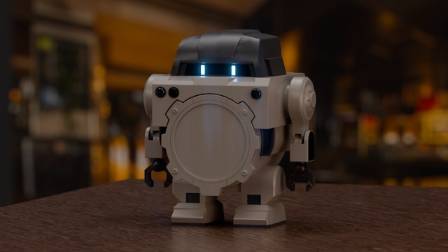
Robots usually fall into two categories in people’s minds: either irresistibly lovable or deeply unsettling machines that seem ready to overthrow humanity someday.
Thankfully, the robots in this collection belong firmly to the first category. While science fiction often imagines artificial intelligence turning against humans, many real-life robots are actually designed to entertain, comfort, and assist people. Some are playful companions for children, others provide emotional support, and a few even perform music or household tasks. Here’s a look at several charming robots that prove technology can have a softer side.
NEC PaPeRo
Created by the Japanese tech company NEC, PaPeRo—short for “Partner-type Personal Robot”—was designed as a friendly companion that makes interacting with the internet feel more natural. The robot can understand and speak more than 3,000 words, alert users to incoming messages, recognize faces, provide updated information, send video messages, dance, play games, and even control other electronic devices remotely.
PaPeRo is equipped with two eye-like cameras, four microphones that function as ears, an ultrasonic sensor for obstacle detection, and three wheels for movement. One of its most interesting traits is its ability to adapt to human interaction. If people ignore the robot, it gradually becomes sluggish and inactive. But when users speak with it regularly, PaPeRo becomes energetic, cooperative, and more engaged. Although highly advanced, the robot remains in the prototype stage and has never been commercially released.
Yume Neko
Cat lovers who struggle with allergies might appreciate Yume Neko, which translates to “Dream Cat.” Developed by Sega Toys, this robotic feline behaves much like a real pet, moving around, lying down, and reacting to touch.
Modeled after a Norwegian Forest Cat, Yume Neko Venus contains a light sensor hidden in its forehead, touch sensors throughout its body, and microphones that allow it to react to voices. When spoken to gently in Japanese, the robot responds by purring. If neglected for too long, it curls up and enters a sleep mode to conserve energy. Unlike many robots on this list, Yume Neko was actually sold commercially in Japan.
E.M.A. Robot
Another creation from Sega Toys is the E.M.A. Robot, short for “Eternal Maiden Actualization.” This interactive humanoid robot was built with a playful personality and even includes a “love mode.” If someone leans close enough, the robot imitates a kiss.
Standing about 15 inches tall, E.M.A. walks with swaying hips thanks to specially designed leg joints. The robot can dance, sing, greet visitors, and even hand out business cards. Infrared sensors help it avoid obstacles while moving around. Marketed primarily toward adults, E.M.A. combined entertainment with a quirky sense of charm.
Sony AIBO
Sony introduced AIBO—short for “Artificial Intelligence roBOt”—as a robotic dog capable of learning from its surroundings. Designed to resemble a futuristic puppy, AIBO came in multiple colors including silver, black, red, blue, green, gold, and white.
Beyond functioning as a virtual pet, AIBO also became a useful research platform for programmers and robotics enthusiasts. Sony even released software tools that allowed owners to customize and reprogram the robot’s behavior. First introduced in 1999, AIBO was discontinued in 2006, though support services continued for several years afterward.
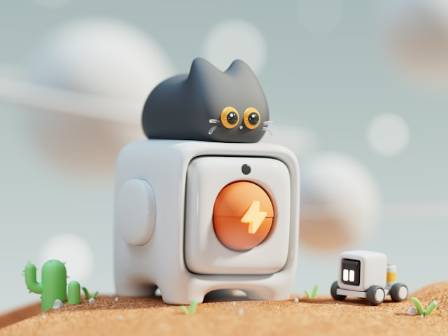
Tweenbots
Unlike the highly sophisticated robots listed above, Tweenbots were intentionally simple. Developed by New York University student Kacie Kinzer, these tiny cardboard robots moved in only one direction at a constant speed. Each featured a smiling face and carried a small flag displaying its destination along with instructions asking strangers to help guide it.
The project was actually a social experiment designed to test how people in New York City would react to vulnerable-looking robots wandering the streets. Surprisingly, every Tweenbot successfully reached its destination without being damaged or stolen. Many pedestrians even protected the robots from traffic or dangerous situations. Their innocent appearance inspired kindness from complete strangers.
Keepon
Keepon is a small yellow robot that resembles a bouncing snowman. Developed by Hideki Kozima and Marek Michalowski, the robot was created to study social interaction and child development.
Keepon contains two camera eyes, a microphone nose, and four motors that allow it to bob rhythmically to music. Researchers discovered that the robot was especially effective when interacting with children who have developmental conditions such as autism. Its cheerful movements and simple design helped children feel more comfortable socially. Keepon also became unexpectedly famous online through music videos featuring it dancing to songs.
Tiro
Tiro is a humanoid service robot developed through collaboration between several South Korean universities and robotics companies, including Hanool Robotics. Featuring a digital LED face, Tiro has taken on a variety of public roles, including English teacher and wedding host.
At one elementary school in South Korea, Tiro conducted English lessons by asking students questions in English. The robot also officiated a wedding for one of Hanool Robotics’ engineers, while other robots acted as assistants and ushers during the ceremony. Tiro’s advanced capabilities came with a very high price tag.
Fujitsu HOAP-3
The HOAP-3 humanoid robot, developed by Fujitsu, was designed primarily for robotics research. The robot learns through observation and interaction, studying human movement and copying actions it sees.
Standing about 60 centimeters tall, the robot contains cameras, microphones, accelerometers, distance sensors, pressure sensors, LEDs for facial expressions, and 28 movable joints. It can also recognize and synthesize speech. Researchers use the HOAP-3 to study how robots might eventually function more naturally in environments designed for humans.
Toshiba Wheelie Robot
The Toshiba Wheelie robot combines practicality with a charming appearance. Resembling a futuristic household assistant, the robot is able to transport items from one room to another using a flat platform mounted on its head.
Built by Toshiba, Wheelie uses two wheels for movement and retractable supports to keep itself balanced while carrying objects. It also includes stereo cameras and a laser range finder to help it avoid furniture and walls. Although it cannot pick items up on its own, it represents another small step toward automated household assistance. Like several other robots mentioned here, Wheelie remained an experimental project rather than a commercial product.
अगला सहारा

हेनरी दि नेविगेटर और अन्वेषण का युग
क्लो एलिज़ाबेथ
महिलाओं के लिए आदर्श घड़ी चुनने के लिए एक व्यापक मार्गदर्शिका
हरिदास अर्जुन कार्की

कला में 25 विभिन्न प्रकार के पेंटब्रश
कला में 25 विभिन्न प्रकार के पेंटब्रश

Successful Methods for Growing Beautiful Hibiscus
Brian Scott Robinson

प्रीमियम लेदर फुटवियर चुनने के लिए आधुनिक सज्जन की गाइड
मनोहर लाल कसौधन

रात में चौदहवाँ पहाड़ चढ़ना
विकास