धीरे-धीरे पढ़ें
What Are Nebulae And How Are They Formed?
Nebulae are enormous collections of gas and dust drifting through space. The singular form is "nebula," while the plural is "nebulae." These magnificent structures rank among the most beautiful sights in the universe. Over time, astronomers have given many nebulae names inspired by familiar objects and creatures, including birds, insects, sea animals, mammals, and even supernatural figures.
Grace Bennett
रचनाकार
याद रखें
नीचे पूरी रचना पढ़ें और अपने लिए उपयोगी बात चुनें।
अनुभाग
सकारात्मक विचार
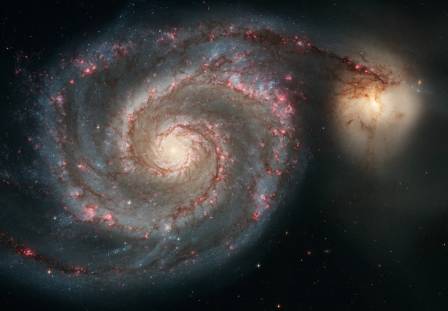
Nebulae are enormous collections of gas and dust drifting through space. The singular form is "nebula," while the plural is "nebulae." These magnificent structures rank among the most beautiful sights in the universe. Over time, astronomers have given many nebulae names inspired by familiar objects and creatures, including birds, insects, sea animals, mammals, and even supernatural figures.
Although space may appear empty, it contains enough material for these giant clouds to develop. Understanding how nebulae form helps explain the life cycle of stars and the evolution of galaxies.
The Formation of a Nebula
The vast regions between stars are incredibly empty compared to Earth, but they are not completely void. Even in interstellar space, small numbers of atoms and particles are scattered throughout the cosmos.
A nebula begins when these particles gradually gather together. As matter accumulates, gravity becomes stronger, attracting even more gas and dust. Over millions of years, this process creates enormous clouds that can stretch across vast distances.
Certain regions inside the cloud become denser than others. As additional material falls into these dense pockets, the pressure and gravity increase. Much of this material consists of hydrogen, and when enough hydrogen collects in one area, the cloud begins collapsing inward.
Eventually, temperatures and pressures rise to the point where nuclear fusion starts. Hydrogen atoms combine to form helium, releasing tremendous amounts of energy. At that moment, a new star is born inside the surrounding cloud of gas and dust.
A Birthplace for Stars and Planetary Systems
When a newly formed star begins shining, it emits powerful radiation and streams of charged particles known as stellar winds. These winds push surrounding gas away from the star, while other dense regions continue gathering material.
As this process continues, planets can form around young stars from leftover dust and gas. Remaining material may drift elsewhere and begin forming new clouds, eventually leading to additional stars and planetary systems.
Nebulae are often called stellar nurseries because they are the locations where stars are created. Interestingly, they can also be connected to the deaths of stars.
When a massive star exhausts its nuclear fuel, it may collapse and explode in a supernova. The explosion sends shock waves and enriched material into nearby space. These shock waves can compress surrounding gas clouds, triggering the birth of another generation of stars. In this way, nebulae participate in an ongoing cycle of creation and destruction.
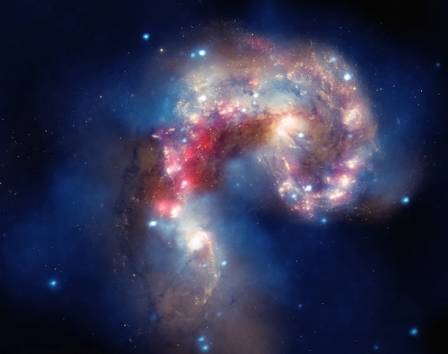
The Four Major Types of Nebulae
Planetary Nebulae
Despite their name, planetary nebulae have nothing to do with planets. During the eighteenth century, astronomer William Herschel observed these objects through relatively small telescopes. Their round appearance reminded him of gas giant planets, leading to the name.
A famous example is the Ring Nebula. Other notable examples include the Helix Nebula and the Eskimo Nebula.
These nebulae form when aging stars shed their outer layers, leaving behind a hot stellar core that illuminates the expanding gas.
Reflection Nebulae
Reflection nebulae do not produce their own visible light. Instead, they shine because nearby stars illuminate the surrounding dust.
Young, bright stars often light up these clouds, causing them to appear blue because shorter wavelengths of light scatter more effectively through the dust.
One well-known example is the Trifid Nebula, while another is the reflection nebula associated with the Pleiades.
Emission Nebulae
Emission nebulae glow because energetic ultraviolet radiation from hot young stars ionizes surrounding hydrogen gas.
As electrons recombine with hydrogen atoms, they emit light, particularly in the red portion of the spectrum. This process gives emission nebulae their distinctive reddish appearance.
Famous examples include the Orion Nebula and the Crab Nebula.
Many emission nebulae contain dark patches where dense dust blocks the light. Some nebulae display characteristics of both emission and reflection nebulae, including the Trifid Nebula.
Dark Nebulae
Dark nebulae, also known as absorption nebulae, do not shine. Instead, they block the light coming from stars or glowing nebulae behind them.
A classic example is the Horsehead Nebula. Its striking silhouette is created by thick clouds of dust that obscure brighter regions behind it.
These nebulae often have irregular shapes. Some are large enough to be seen without a telescope as dark regions cutting across the bright band of the Milky Way. One famous example is the Coalsack Nebula.
How the Andromeda "Nebula" Changed Astronomy
Less than a century ago, many astronomers believed the Milky Way represented the entire universe.
Before the 1920s, spiral-shaped objects seen through telescopes were commonly classified as "spiral nebulae" and thought to exist within our own galaxy.
This understanding changed dramatically when astronomer Edwin Hubble used the powerful 100-inch telescope at Mount Wilson Observatory to study one of these objects in greater detail.
Hubble successfully identified individual stars within what was then known as the Andromeda Nebula. This proved that it was not a nearby gas cloud but an entirely separate galaxy comparable to the Milky Way.
The object was subsequently recognized as the Andromeda Galaxy.
This discovery revolutionized astronomy. Scientists suddenly realized that the universe contained countless galaxies beyond our own. Today, astronomers estimate that the observable universe contains hundreds of billions of galaxies, each containing vast numbers of stars and planetary systems.
Conclusion
Nebulae represent both the birthplaces and remnants of stars. They are among the most important structures in the cosmos, playing a crucial role in the ongoing cycle of stellar evolution.
Although some nebulae span hundreds of light-years, they remain incredibly diffuse. In fact, if you collected a volume of nebular material equal in size to Earth, it would weigh surprisingly little.
Whether they are glowing, reflecting light, or appearing as dark silhouettes, nebulae remain some of the most captivating objects in astronomy. Observing them offers a glimpse into the processes that create stars, shape galaxies, and transform the universe itself.
If you have access to a telescope, consider observing the Orion Nebula, one of the most famous star-forming regions in the night sky. Located about 1,344 light-years away within the constellation Orion, it is bright enough to be seen with the naked eye under dark skies and remains one of the finest celestial sights available to observers.
अगला सहारा

चीन की प्रसिद्ध इमारतें: विभिन्न युगों की 11 आकर्षक जगहें
चिन्मय

मोज़ेक कला की बुनियादी बातें: शुरुआती लोगों के लिए चरण-दर-चरण मार्गदर्शिका
अर्जुन कार्की

सरल इंटीरियर डेकोर टिप्स जो आपके घर को बदल सकते हैं
मोनिका

आंतरिक स्थानों को रूपांतरित करना: बड़े आकार की दीवार कला के लिए एक मार्गदर्शिका
काव्या ठाकर

Quang Noodles and Cao Lau: Da Nang’s Rustic Gems Shine in 2026 World’s Top 100 Noodle Dishes
Abigail

Successful Methods for Growing Beautiful Hibiscus
Brian Scott Robinson