धीरे-धीरे पढ़ें
Do Old TV Antennas Still Work in the Digital Age?
In a world dominated by streaming platforms and satellite packages, the humble rooftop antenna seems like something from another lifetime. Yet many households still have one tucked away in the attic or perched on a pole outside. The big question is: can those “vintage” devices still tune into today’s broadcasts? The answer depends on how television technology has shifted over the years and what your antenna was built to handle.
Henry
रचनाकार
याद रखें
नीचे पूरी रचना पढ़ें और अपने लिए उपयोगी बात चुनें।
अनुभाग
सकारात्मक विचार
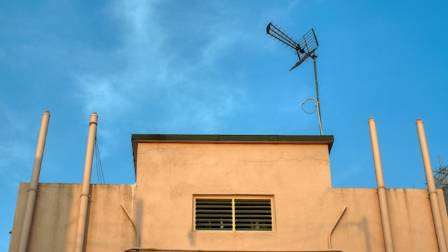
In a world dominated by streaming platforms and satellite packages, the humble rooftop antenna seems like something from another lifetime. Yet many households still have one tucked away in the attic or perched on a pole outside. The big question is: can those “vintage” devices still tune into today’s broadcasts? The answer depends on how television technology has shifted over the years and what your antenna was built to handle.
The Age of Analog Signals
Before digital technology took over, television relied on analog broadcasts. These transmissions operated in two major ranges: VHF (Very High Frequency) covering 54–216 MHz and UHF (Ultra High Frequency) spanning 470–698 MHz. Antennas were crafted to capture signals within these bands, with VHF models usually tuned for channels 2–13 and UHF versions designed for channels 14–69.
Outdoor antennas generally delivered clearer reception than compact indoor units, since size and placement often dictated signal quality.
The Switch to Digital Television
During the early 2000s, the FCC required all U.S. stations to abandon analog and move to digital broadcasting. This transformation reshaped how signals were transmitted and how viewers received them.
Digital signals are stronger against interference but demand greater bandwidth. Because of this, digital channels are spaced farther apart, reducing the overall number of available slots. Frequencies were reassigned as part of the transition, and many stations migrated to different positions on the spectrum.
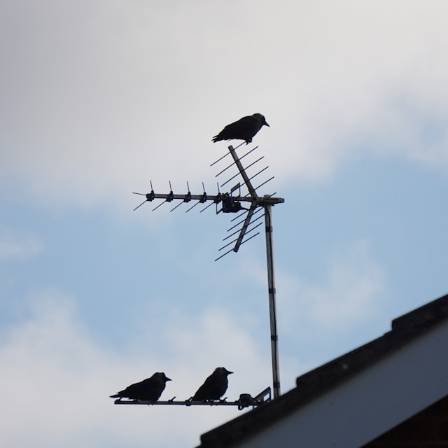
Can Old Antennas Handle Digital Broadcasts?
Whether your aging antenna still works comes down to several considerations:
Antenna Build
Older models meant for analog may still capture digital signals, but efficiency varies. Indoor units, often smaller and less powerful, might struggle, while larger outdoor designs with higher gain (measured in decibels) have a better shot.
Frequency Coverage
If your antenna was tuned for VHF, it may still pull in digital stations broadcasting within that range. However, a large portion of digital programming has shifted to UHF, so antennas with UHF support tend to perform better.
Tuner Compatibility
Even if the antenna grabs a signal, your TV must be able to decode it. Modern sets have digital tuners built in, but older televisions require a separate digital converter box to process the broadcast.
Signal Factors
Performance also depends on signal strength and clarity. Weak signals may cause pixelation or complete dropouts. Proximity to broadcast towers improves reliability, while distance, obstacles like hills or tall buildings, and interference from electronics can reduce reception quality.
What to Do If Reception Fails
If your antique antenna falls short, you still have choices:
-
Upgrade to a modern digital antenna: Today’s designs are engineered for new frequency bands and are often more compact.
-
Add a signal amplifier: A booster can strengthen weak signals and reduce pixelation.
-
Consider alternatives: Cable, satellite, and internet-based services such as YouTube TV, Sling, or Netflix provide different ways to watch without relying on over-the-air signals.
Conclusion
Your old TV antenna might not be as obsolete as it looks. Many can still catch digital broadcasts, particularly outdoor models with wide frequency coverage. However, results vary widely depending on design, distance, and obstacles. If reception is unreliable, upgrading to a new digital antenna or exploring modern viewing options might be the smoothest path forward.
अगला सहारा
Beginner’s Guide to Winter Off-Roading
Julian Hayes
समुद्री ढेर क्या है?
अभय

अपने सपनों को डिकोड करना: THCP और Delta-9 से प्रेरित जंगियन ड्रीम एनालिसिस
ज्योति

21 Most Colorful Birds: Nature’s Vibrant Masterpieces
Aiden
धीमी गति से जीना क्या है?
सुनीता

स्कीइंग का इतिहास: स्कीइंग के अतीत पर एक संक्षिप्त दृष्टिकोण
सीता