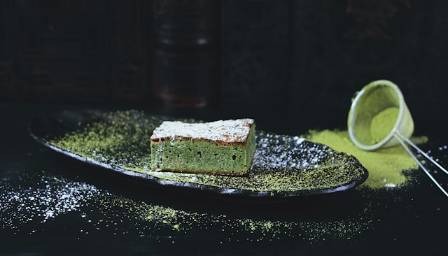
In the realm of fusion desserts, few creations strike the perfect balance of tradition and innovation like the Matcha Mille Crepe Cake. Blending the earthy depth of Japanese matcha with the delicate layers of French mille crêpes, this no-bake masterpiece has captivated dessert lovers worldwide with its silky texture, subtle sweetness, and harmonious contrast of flavors. Originating from the creative marriage of two culinary traditions—France’s classic gâteau mille crêpes (literally “thousand crepe cake”) and Japan’s reverence for matcha as a culinary and cultural cornerstone—this cake is more than just a treat; it’s a celebration of cross-cultural collaboration. Light yet indulgent, with paper-thin crepes layered between clouds of fresh whipped cream, it offers a sensory experience that dances on the palate: the slight bitterness of high-quality matcha tempering the richness of the cream, the softness of the crepes melting into the airy filling, and a final dusting of matcha that lingers with a fragrant, vegetal finish. Whether served at a wedding, afternoon tea, or a quiet family gathering, the Matcha Mille Crepe Cake exudes elegance and approachability, proving that the most memorable desserts are those that honor tradition while embracing new possibilities.
What Is Matcha Mille Crepe Cake?
At its core, Matcha Mille Crepe Cake is a union of two iconic elements: premium matcha and delicate, paper-thin crepes. To understand its magic, we must first appreciate the uniqueness of matcha itself—a finely ground green tea powder that differs drastically from regular green tea leaves. Unlike loose-leaf tea, which is steeped and discarded, matcha is made from shade-grown tea plants (Camellia sinensis) whose leaves are carefully handpicked, steamed, dried, and ground into a fine powder, preserving all their nutrients and flavor. This process, refined over centuries in Japan, results in two primary grades: ceremonial grade (used in tea ceremonies, with a bright green hue, smooth texture, and mild bitterness) and culinary grade (ideal for baking, with a deeper green color and more robust flavor that stands up to other ingredients). The term “mille crêpes” translates to “thousand crepes,” a playful exaggeration—most recipes call for 10 to 20 layers, each thinner than a sheet of paper—originating from French pastry traditions, where the focus is on lightness and texture. The Japanese twist elevates this classic by infusing the crepes with matcha, replacing the traditional vanilla or lemon with a flavor that is both familiar and exotic, and refining the assembly to create a perfectly rounded edge, a signature of Japanese pastry aesthetics. What sets this cake apart is its balance: it is not overly sweet (a hallmark of many Asian desserts), allowing the natural complexity of the matcha to shine through, while the layers of cream add a luxurious creaminess that makes each bite feel indulgent yet not heavy.
7 Key Tips for Perfect Matcha Mille Crepe Cake
Crafting the perfect Matcha Mille Crepe Cake requires patience and attention to detail, but with the right techniques, even home bakers can achieve professional results. First and foremost, invest in high-quality matcha powder—this is the star ingredient, and a low-grade matcha will result in a dull color, bitter aftertaste, and lackluster flavor. Look for culinary grade matcha from reputable Japanese brands, as it is specifically formulated for baking and offers the ideal balance of flavor and color. Second, always rest the batter for at least one hour (or overnight) in the refrigerator. This step is non-negotiable: resting allows the gluten in the flour to relax, prevents the crepes from tearing, and ensures the dry ingredients (especially the matcha and baking powder) fully absorb the wet ingredients, resulting in a smooth, lump-free batter. Third, cook the crepes over low to medium-low heat. A hot pan will create uneven “hot spots” that cause the batter to cook too quickly, leading to thick, rubbery crepes or burnt edges. Instead, heat the pan slowly to ensure even temperature distribution, and brush it with a thin layer of neutral oil (such as canola or grapeseed) before each crepe—use a paper towel to remove excess oil, as too much will make the crepes greasy. Fourth, use two different-sized pans: a 12-inch pan for the final top layer (which will wrap around the cake to create a rounded edge) and a 10-inch pan for the inner layers. This technique, favored by Japanese pastry chefs, ensures the cake has a polished, professional look without the need for complex tools. Fifth, whisk the batter gently and avoid overmixing. Overmixing develops gluten, which leads to tough crepes—mix just until the dry ingredients are incorporated, and don’t worry about a few small lumps (they will be removed when sieving the batter). Sixth, sieve the batter twice: once after combining dry and wet ingredients, and again before refrigerating. Sieving removes lumps, aerates the batter, and ensures the crepes are ultra-thin and smooth. Seventh, whip the cream to medium-firm peaks. Over-whipped cream will be grainy and stiff, while under-whipped cream will be runny and fail to hold the layers together. Medium-firm peaks—where the cream stands upright but curls slightly at the tip—offer the perfect balance of stability and silkiness.
No Oven Required: The Appeal of a Stovetop Dessert
One of the most compelling aspects of Matcha Mille Crepe Cake is that it requires no oven—all you need is a stovetop and a few basic pans. This makes it an ideal dessert for home bakers who lack access to an oven, or those who want to avoid the hassle of preheating and monitoring baking times. The stovetop method also allows for greater control: you can adjust the heat in real time to ensure each crepe is cooked to perfection, and there’s no risk of overbaking or drying out the cake. Additionally, the no-bake nature means the cake is light and refreshing, making it perfect for warm weather or for those who prefer desserts that aren’t overly dense. The process of cooking crepes is also surprisingly meditative—swirling the batter in the pan to create a thin, even layer, waiting for the edges to curl slightly, and flipping with a gentle motion. For many bakers, this hands-on process is part of the charm, turning dessert-making into a relaxing, creative ritual rather than a stressful task. Whether you’re a beginner or an experienced baker, the accessibility of this recipe makes it easy to experiment and customize, ensuring that every batch feels personal and rewarding.
Ingredient Breakdown: Choosing the Best Components for Success
The quality of your ingredients directly impacts the final result of your Matcha Mille Crepe Cake, so it’s worth investing in the best you can find. For the crepes, start with whole milk—its higher fat content creates crepes that are tender and easy to handle, whereas reduced-fat milk can result in thinner, more fragile crepes (save it for if you’re an experienced crepe-maker). Cake flour is essential: its low protein content (around 7-9%) ensures the crepes are soft and delicate, unlike all-purpose flour (10-12% protein) which will make them tough and rubbery. If you don’t have cake flour, you can make your own by mixing 1 cup of all-purpose flour with 2 tablespoons of cornstarch and sifting the mixture twice. For the matcha, as mentioned earlier, culinary grade is best—avoid cheap, low-quality matcha, which often has a bitter, artificial taste and a dull green color. The eggs should be large (50g each without the shell) and at room temperature, as they mix more easily with the other ingredients and help create a smooth batter. Unsalted butter adds richness and moisture, while sugar provides subtle sweetness—granulated sugar works best, as it dissolves easily in the warm milk. For the whipped cream, use heavy (whipping) cream with a fat content of at least 30%—this ensures it whips up to a stable, creamy consistency. Avoid light cream or half-and-half, which don’t have enough fat to hold their shape. Finally, for dusting, use a small amount of ceremonial grade matcha if you have it—its brighter color and smoother texture will give the cake a beautiful, professional finish.
Step-by-Step Guide: Crafting Your Matcha Mille Crepe Cake
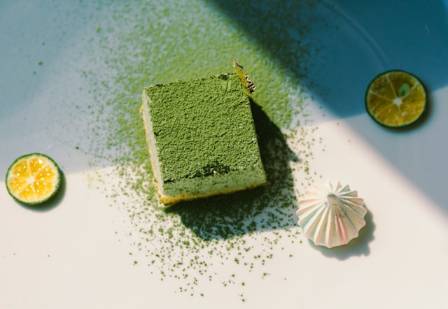
To make the crepe batter, start by warming 1¾ cups of whole milk with 3 tablespoons of sugar in a small saucepan over medium heat—stir until the sugar dissolves, and the milk is warm to the touch (about 105°F/40°C; do not boil, as this will cook the eggs when added). In a large bowl, beat 3 large eggs until smooth, then slowly whisk in the warm milk, taking care to add it gradually to avoid curdling the eggs. Stir in 1½ tablespoons of melted unsalted butter, then set a fine-mesh sieve over the bowl. Add 1 cup of cake flour, 2 tablespoons of culinary grade matcha, and ½ teaspoon of baking powder to the sieve, and sift half of the dry ingredients into the wet mixture—whisk gently to combine, then sift the remaining dry ingredients and mix just until no lumps remain. Pour the batter through the sieve again into a clean bowl to remove any remaining lumps, cover with plastic wrap, and refrigerate for at least 1 hour (or overnight). When ready to cook the crepes, prepare a work surface lined with parchment paper. For the large top crepe, heat a 12-inch nonstick pan over low heat for 5 minutes to ensure even heating, then brush with a thin layer of neutral oil and wipe excess with a paper towel. Increase heat to medium-low, stir the batter well, and pour ⅓ cup (80ml) of batter into the pan—swirl quickly to coat the bottom in a thin layer. Cook for 2 minutes until the edges curl and the crepe is set, then flip with a spatula or chopstick and cook for 30 seconds on the other side. Transfer to the parchment paper and repeat with a 10-inch pan for the inner layers, using ¼ cup (60ml) of batter per crepe—stir the batter before each crepe to prevent separation. You should end up with 1 large crepe and 12-14 small crepes. For the whipped cream, fill a large bowl with ice water and place a smaller bowl on top (an ice bath keeps the cream cold and helps it whip up faster). Add 1 cup of heavy cream to the smaller bowl, whisk on low speed until bubbles form, then gradually add 3 tablespoons of sugar and increase speed to medium-high until medium-firm peaks form. To assemble, lay two long strips of parchment paper in a cross on a rotating cake stand or plate (this makes transferring the cake easier). Place the large crepe in the center (this will be the top when flipped), spread a thin layer of whipped cream (about ⅛ inch/3mm thick) over the center 8 inches, leaving a 2-inch border. Add a small crepe on top, spread cream over the center with a ½-inch border, and repeat until all small crepes are used, ending with a small crepe on top. Line a round, curved shallow dish with plastic wrap, transfer the cake using the parchment strips, and wrap the plastic wrap tightly around the cake to shape it into a perfect circle—secure with a clip and refrigerate for at least 2 hours to set. When ready to serve, flip the cake onto a serving platter, dust with 2 teaspoons of matcha using a fine-mesh sieve, and slice into wedges while chilled (it cuts more cleanly this way). Let the slices sit at room temperature for 5 minutes before serving to allow the flavors to meld.
Assembling the Perfect Round Edge: A Japanese Pastry Trick
The signature rounded edge of Japanese-style Mille Crepe Cake is what sets it apart from its French counterpart, and achieving this look is simpler than it seems—all you need is a curved shallow dish and plastic wrap. After layering the crepes and cream, the cake will have a slightly uneven, jagged edge, but the molding process smooths it out into a polished, professional shape. Start by choosing a dish that is slightly larger than your cake (a 10-inch dish works for a 10-inch cake) with a gentle curve—avoid deep dishes, as they will create a too-rounded shape. Line the dish with plastic wrap, ensuring there is enough excess to wrap around the entire cake—this prevents the cake from sticking and makes it easy to remove. Transfer the layered cake to the center of the dish using the parchment strips, then remove the strips. Starting at one corner of the plastic wrap, pull it snugly over the cake’s edge and continue clockwise, gathering the plastic wrap at the top center—this evenly distributes pressure and shapes the cake into a perfect circle. Securing the plastic wrap tightly is key: if it’s loose, the cake won’t hold its shape. Refrigerating the cake for at least 2 hours allows the cream to set and the shape to lock in, so resist the urge to skip this step. When you unwrap and flip the cake, you’ll be rewarded with a smooth, rounded edge that looks like it came from a high-end pastry shop—no special tools or advanced skills required.
Storage and Serving Tips: Keeping Your Cake Fresh and Delicious
Matcha Mille Crepe Cake is best enjoyed within 3-4 days of making, as it uses fresh whipped cream which doesn’t have a long shelf life. To store, wrap the cake tightly in plastic wrap or place it in an airtight container and refrigerate—avoid freezing, as this will alter the texture of the crepes and cream, making them soggy when thawed. If you have leftover crepes (uncooked batter can be stored in the refrigerator for up to 2 days, or cooked crepes can be stacked with parchment paper between them and wrapped in plastic for up to 1 day), you can use them to make a smaller cake or serve them with fresh fruit and cream for a quick dessert. When serving, slicing the cake while it’s still chilled ensures clean, neat slices—use a sharp knife and wipe the blade between slices to prevent the cream from sticking. Letting the slices sit at room temperature for 5 minutes before serving is crucial: this allows the cream to soften slightly and the matcha’s flavor to fully develop, resulting in a more balanced, enjoyable bite. For an extra touch, serve each slice with a dollop of fresh whipped cream and a sprinkle of matcha, or pair it with a side of fruit compote (as many readers have suggested—strawberry, peach, or plum compote adds a bright, fruity contrast to the rich cream and earthy matcha).
Common Questions and Troubleshooting: Solving Baker’s Dilemmas
Even with detailed instructions, home bakers may encounter a few hiccups, but most issues are easy to fix. One common question is whether the batter can be made the night before—yes, simply store it in an airtight container in the refrigerator, and stir well before using (the matcha may settle, so sieving it again is optional but recommended to keep the crepes smooth). If you cook the crepes ahead of time, stack them with parchment paper between each layer, wrap in plastic, and refrigerate for up to 1 day—they will stay soft and won’t stick together. If your crepes are tearing when flipping, it’s likely because the pan wasn’t hot enough, the batter was too thin, or you flipped them too soon—wait until the edges curl and the crepe is set (about 2 minutes) before flipping, and adjust the batter consistency by adding a tablespoon of milk if it’s too thick. If the cream is runny, you either under-whipped it or the cream was too warm—chill the cream and bowl first, and whisk until medium-firm peaks form. For those who don’t like matcha, you can substitute it with cocoa powder, powdered dried strawberries, or additional cake flour—just keep the amount the same to maintain the batter’s consistency. If your cake’s edge isn’t rounded enough, wrap the plastic wrap tighter and refrigerate for longer—this gives the cream more time to set into the desired shape.
Creative Variations: Personalizing Your Matcha Mille Crepe Cake
While the classic recipe is delicious on its own, there are endless ways to customize it to suit your taste. For a chocolate twist, add 2 tablespoons of cocoa powder to the cream filling (matcha and chocolate are a classic pairing, as the chocolate’s sweetness balances the matcha’s bitterness). For a fruity version, layer fresh strawberries, raspberries, or mango between the crepes—their juiciness adds a bright contrast to the rich cream. If you prefer a sweeter cake, increase the sugar in the batter or cream by 1-2 tablespoons, or add a drizzle of honey or maple syrup to the cream. For a more indulgent treat, spread a thin layer of white chocolate ganache between the crepes, or sprinkle toasted sesame seeds on top for a nutty crunch. Vegan bakers can adapt the recipe by using plant-based milk (oat milk works best for crepes) and coconut cream (chilled overnight and whipped) instead of dairy cream, and egg replacers (such as flax eggs) for the batter—just note that the crepes may be slightly more fragile, so handle them gently. No matter how you customize it, the core of the recipe—thin, delicate crepes and creamy filling—remains the same, ensuring a dessert that is always elegant and delicious.
Conclusion: The Joy of Sharing a Handmade Fusion Dessert
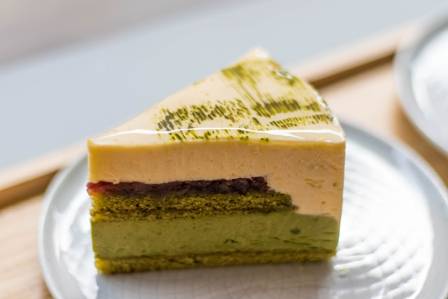
Matcha Mille Crepe Cake is more than just a dessert—it’s a labor of love that brings people together. From the meditative process of cooking crepes to the satisfying moment of unwrapping the perfectly rounded cake, every step is a reminder that handmade desserts are about more than taste; they’re about care, creativity, and connection. Whether you’re a seasoned baker or trying your hand at fusion desserts for the first time, this recipe offers a rewarding experience that results in a cake that is as beautiful as it is delicious. Its cross-cultural roots—French technique meets Japanese flavor—celebrate the best of both worlds, proving that food has the power to bridge cultures and create shared moments of joy. As you slice into the cake, watching the layers of green crepes and white cream reveal themselves, and taste the harmonious blend of matcha and cream, you’ll understand why this dessert has become a favorite in bakeries and homes around the world. So gather your ingredients, take your time, and enjoy the process—because the best desserts are those that are made with love and shared with the people you care about.