धीरे-धीरे पढ़ें
The Spectacular History of National Ferris Wheel Day and the Engineering Wonders That Define Our Modern Skylines
Every year on the fourteenth of February, amusement enthusiasts and engineering history buffs across the globe pause to celebrate the annual occasion of National Ferris Wheel Day. This unique holiday commemorates the birth anniversary of George Washington Gale Ferris Junior, the brilliant American mechanical mind who conceptualized and constructed the very first modern rotating observation wheel. While the precise modern founder of this commemorative calendar day remains undiscovered, the event serves as a powerful reminder of how a single innovative concept can permanently transform global entertainment and urban design.
Matthias Ellington
रचनाकार
याद रखें
नीचे पूरी रचना पढ़ें और अपने लिए उपयोगी बात चुनें।
अनुभाग
सकारात्मक विचार

Celebrating the Legacy of a Masterful American Inventor
Every year on the fourteenth of February, amusement enthusiasts and engineering history buffs across the globe pause to celebrate the annual occasion of National Ferris Wheel Day. This unique holiday commemorates the birth anniversary of George Washington Gale Ferris Junior, the brilliant American mechanical mind who conceptualized and constructed the very first modern rotating observation wheel. While the precise modern founder of this commemorative calendar day remains undiscovered, the event serves as a powerful reminder of how a single innovative concept can permanently transform global entertainment and urban design.
The World Fair Challenge and Architectural Rivalries
The historical narrative behind this rotating mechanical marvel traces back to the early eighteen-nineties as organizers commenced rigorous preparations for the famous eighteen ninety-three World's Columbian Exposition in Chicago. The director of structural works for the massive exposition, Daniel Burnham, issued a profound creative challenge to the domestic engineering community, demanding a signature centerpiece for the fair that could successfully rival the sheer majesty and global fame of the newly erected Eiffel Tower in Paris. The French iron monument had quickly captured the attention of international travelers, prompting American planners to seek an equally breathtaking attraction, though numerous early concepts and blueprints were repeatedly reviewed and discarded by the selection committee before a viable solution emerged.
From a Simple Napkin Sketch to an Engineering Triumph
Motivated by this grand architectural competition, George Washington Gale Ferris contemplated a variety of structural options until a breakthrough moment occurred during an evening dinner at a traditional dining house in Chicago. He immediately sketched the foundational circular design onto ordinary paper napkins before dedicating his energies to refining the comprehensive mechanical blueprints. When the radical concept was initially presented to fair leadership, Burnham expressed immense skepticism regarding whether such a massive rotating structure could securely transport passengers to such unprecedented altitudes. Undeterred by this institutional resistance, the determined inventor invested twenty-five thousand dollars of his personal funds to execute rigorous safety evaluations, secured an additional six hundred thousand dollars from private financial backers, recruited specialized engineers, and successfully fabricated a colossal wheel spanning two hundred and fifty feet in diameter suspended elegantly between a pair of one hundred and forty foot supporting towers. The structural masterpiece achieved monumental acclaim upon its debut, soaring twenty-six stories into the atmosphere and generating over seven hundred and twenty-six thousand dollars in total revenue, which represented a massive financial windfall for the fair organizers during that era.

Tragic Aftermath and the Undying Legacy of Global Observation Wheels
Notwithstanding the immense commercial and cultural triumph of his creation, the inventor faced severe personal and financial hardships following the conclusion of the international exposition. Protracted legal battles concerning financial distributions and intellectual properties eventually pushed him into complete bankruptcy, while his marital relationship collapsed under the stress. In eighteen ninety-six, a mere three years after his historic achievement, the visionary engineer passed away at the young age of thirty-seven after contracting typhoid fever. His original mechanical creation eventually met a similarly unfortunate conclusion when it was dismantled using explosives for industrial scrap metal in nineteen hundred and six. Nevertheless, his enduring legacy thrives across the modern world as spectacular observation structures continue to dominate contemporary urban skylines globally, known variously by descriptive terms including the giant wheel, the big wheel, or the observation wheel.
Monumental Rotating Masterpieces Scattered Across the Globe
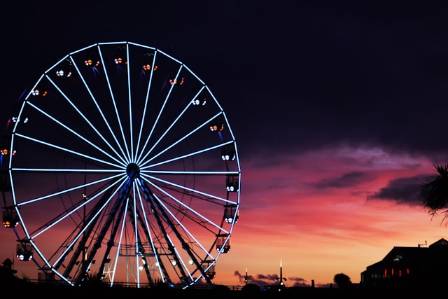
Today, magnificent iterations of this classic engineering concept can be observed spanning multiple continents, showcasing how the design has evolved over the centuries. For instance, a famous observation structure in Tianjin, China, is uniquely integrated directly above a major transit bridge crossing the Hai River, offering commuters a spectacular view. Similarly, the massive observation wheel in London offers passengers sweeping vistas of the historic Thames River, while the timeless amusement wheel at Coney Island in New York represents a historic masterpiece built during the early twentieth century that still charms visitors. International travelers can also experience breathtaking panoramic views of the cascading waters at Niagara Falls from an elevated vantage point in Canada. On an even grander scale, the absolute pinnacle of modern observation wheel engineering is embodied by the spectacular Ain Dubai structure located within the United Arab Emirates, which stands as the tallest operating wheel on Earth by reaching an astonishing peak altitude of three hundred and twenty-one meters, ensuring that the spirit of the original nineteenth-century invention continues to captivate millions of global adventurers who share their aerial views and celebrate the joy of travel every day.
अगला सहारा

Easy Painting Ideas for Kids
Daniel

अपने यूरोपीय दौरे पर देखने के लिए 8 यूरोपीय वास्तुकला शैलियाँ
उर्वशी

Log Cabin Living Room Ideas
Freya Knight

How To Care For The Monstera Deliciosa
Andrew Martin
Automotive Masterpieces: The Most Beautiful Car Designs in History
Sophia Williams

Kunlun Volcanic Group
Fiona Carlisle